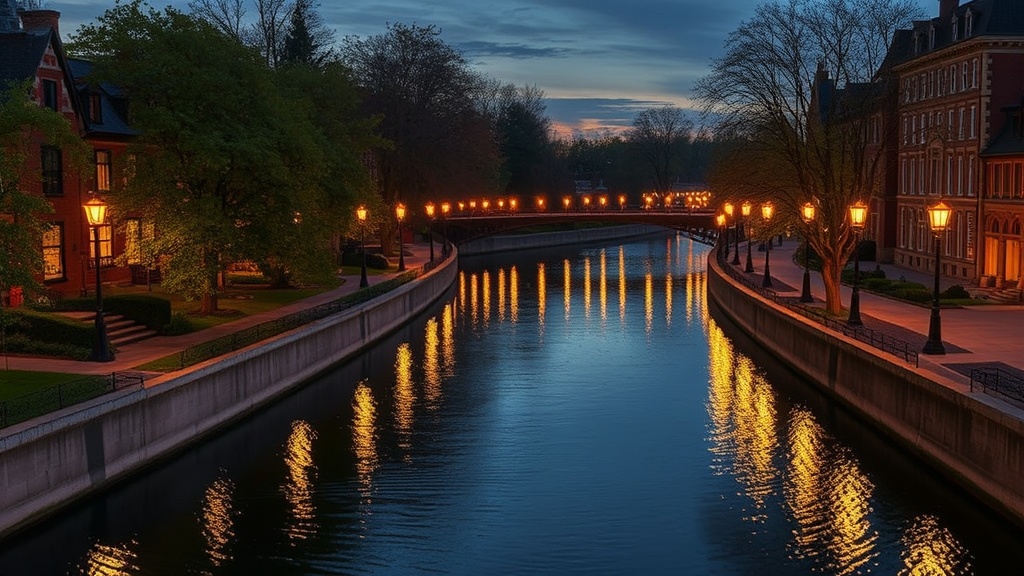
Uncovering the Unseen: Fascinating Historical Echoes Along the Rideau Canal

Uncovering the Unseen: Fascinating Historical Echoes Along the Rideau Canal
Did you know the Rideau Canal system, a UNESCO World Heritage Site, was originally constructed not for commerce, but primarily as a military defense route in the wake of the War of 1812? This astonishing fact often gets lost amidst its modern-day charm as a recreational waterway. Yet, beyond its picturesque locks and scenic pathways, the Rideau Canal holds centuries of stories, offering a deeper narrative for those willing to explore. This guide delves into some of the lesser-known, truly remarkable historical sites that frame the region's heritage, inviting you to discover its profound past.
What hidden stories does the Rideau Canal tell?
The Rideau Canal, an engineering marvel of its time, carries with it tales of early Canadian settlement, military strategy, and human perseverance—and hardship. It's a living museum, and understanding its history changes how you experience its every bend and lockstation. From the innovative engineering of Lieutenant-Colonel John By to the harsh realities faced by thousands of laborers, every stone seems to whisper of forgotten eras. While many visitors marvel at the working locks, the fortifications and industrial relics scattered along the waterway reveal an even richer tapestry of its origins and evolution.
- The Blockhouses: Sentinels of a Strategic Past
When you journey along the Rideau, you'll encounter a series of stone blockhouses—fortified structures that stand as stark reminders of the canal's original military purpose. These aren't just quaint old buildings; they were designed to protect the critical lockstations from potential American attacks. Take, for instance, the blockhouse at Merrickville or the impressive one at Kingston Mills. These robust structures, often built with thick stone walls and loop-holed windows, were meant to house garrisons and provide defensive firing positions. The very presence of these blockhouses emphasizes the geopolitical anxieties that shaped early 19th-century North America. Exploring these sites gives you a tangible connection to the strategic fears that drove the canal's construction, offering a chilling glimpse into a time when cross-border conflict was a very real threat. They tell a story of vigilance and preparedness, a narrative far removed from today's peaceful boating.
Nestled beside the Ottawa Locks, the Bytown Museum occupies Ottawa’s oldest stone building, the former Commissariat Building. This is where the story of the nation's capital truly begins, not with grand parliamentary declarations, but with the grit and determination of canal builders. The museum brilliantly chronicles the canal's construction, the early settlement of Bytown (which later became Ottawa), and the daily lives of the people who shaped this region. It’s a treasure trove of artifacts, personal accounts, and historical documents that paint a vivid picture of the challenges and triumphs of a nascent community. Learning about the canal from this perspective—through the eyes of those who built it and lived alongside it—provides an intimate understanding of how this waterway literally paved the way for a capital city. It’s a perfect starting point to understand the wider historical context of the Rideau. For more details on their exhibitions, you can visit the